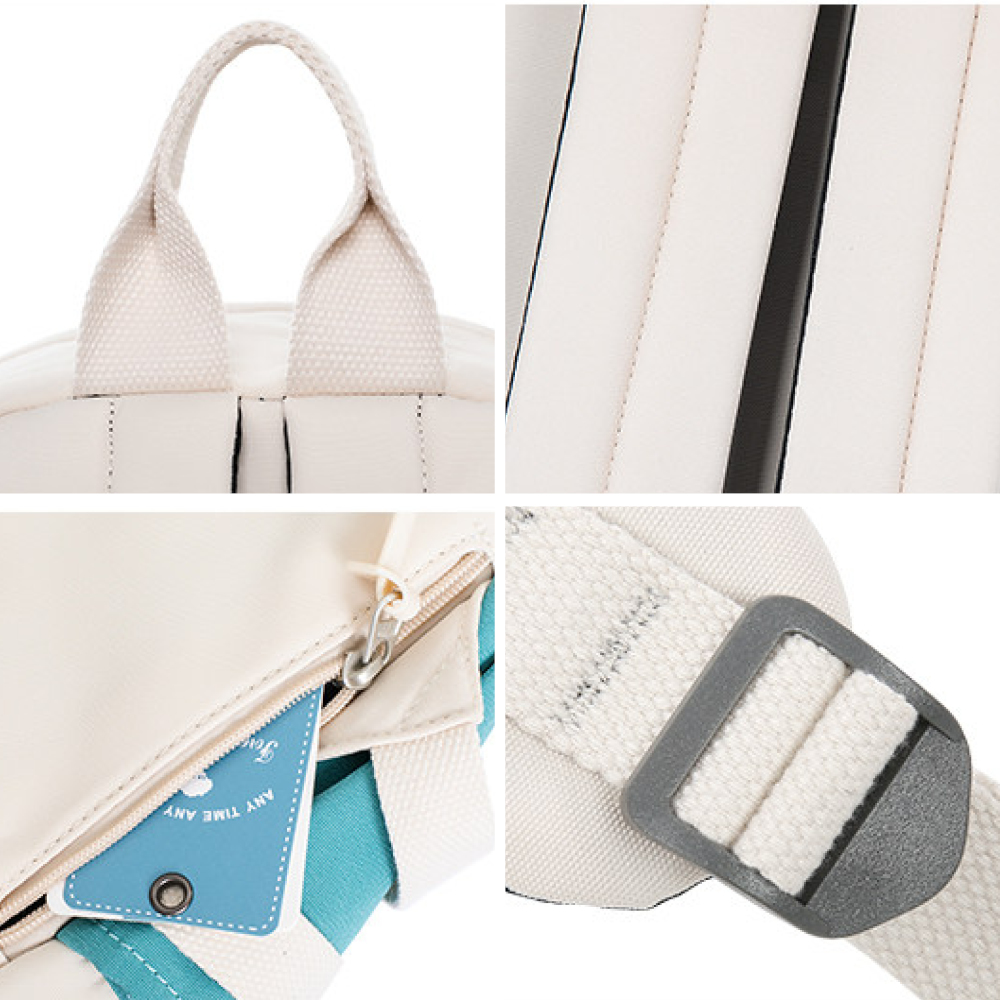
Article Summary: A backpack’s quality is often hidden in the details. Learn how stitching, zippers, fabric, handles, straps, lining, and reinforcement points can help you judge craftsmanship before choosing a backpack.
Backpack Craftsmanship: How Small Details Reveal the Quality of a Backpack
A backpack may look simple from the outside, but its quality is often determined by dozens of small construction details. Here’s how to inspect the craftsmanship before choosing your next everyday, travel, or laptop backpack.
When people compare backpacks, they often start with color, shape, capacity, or overall appearance. Those things matter, but they do not necessarily tell you how well a backpack has been made.
The real difference can often be found in the details: how the seams are finished, how the shoulder straps are attached, how smoothly the zipper moves, and whether the bottom of the bag has enough reinforcement. What really matters is how all these small elements work together.
Why Backpack Craftsmanship Matters
A backpack experiences more stress than it may appear to. It is picked up by the handle, pulled open by the zipper, placed on the floor, carried on one or both shoulders, and often packed with books, electronics, clothing, or other heavy items.
That means construction quality directly affects everyday comfort and usability. A backpack with thoughtful reinforcement and carefully finished seams can feel very different from one that simply looks good in a product photo.
1. Start With the Stitching
Stitching is one of the easiest details to inspect. Look closely at the seams instead of only looking at the overall shape of the backpack.
Good stitching should generally appear even, consistent, and properly aligned. Loose threads, skipped stitches, uneven seam lines, or visibly strained fabric can indicate areas that deserve closer attention.
Where to Inspect the Stitching
- Shoulder strap attachment points
- Top handle connections
- Zipper edges
- Bottom corners
- Side seams
- Front pocket attachments
These are stress points because they experience more pulling and movement than the middle of a fabric panel.
2. Look for Reinforced Stress Points
A backpack does not experience the same amount of stress everywhere. Handles and shoulder straps, for example, carry much more load than decorative panels.
That is why reinforcement matters. Extra stitching, layered fabric, reinforced patches, or carefully constructed attachment points can help distribute tension over a larger area.
When inspecting a backpack, gently examine where the straps meet the main body. The transition should look secure rather than like a thin piece of fabric simply sewn onto the bag.
3. Examine the Zipper Quality
Zippers may be small, but they have a major impact on everyday use. A backpack can have excellent fabric and attractive construction, yet an inconvenient zipper can quickly become frustrating.
Open and close the zipper several times if possible. It should move smoothly without repeatedly catching on the fabric or requiring excessive force.
| Detail | What to Look For |
|---|---|
| Zipper Movement | Smooth movement without frequent catching |
| Zipper Tape | Cleanly attached to the fabric |
| Zipper Pull | Comfortable and secure to grip |
| End Construction | Securely finished rather than loosely exposed |
4. Check the Shoulder Strap Construction
Shoulder straps are among the most important structural parts of a backpack. They support the weight of everything inside, so their attachment and padding deserve close attention.
Look for straps that connect to the main body through reinforced areas. The stitching should feel substantial around the attachment point, particularly for backpacks intended to carry laptops, books, or travel equipment.
Padding is another important detail. A comfortable backpack usually combines appropriate strap width, padding, adjustability, and a shape that sits naturally on the shoulders.
5. Inspect the Top Handle
The top handle may look like a small accessory, but it can experience significant stress. Think about how often you pick up a backpack from a desk, chair, car seat, airport floor, or luggage rack.
A well-constructed handle should be securely connected to the main body and supported at the attachment points. Wider or reinforced handle connections can be particularly useful for backpacks that are frequently lifted while fully loaded.
6. Pay Attention to the Fabric and Edges
The fabric tells you more than just how a backpack looks. Its texture, density, flexibility, and finishing can influence the overall feel of the bag.
For everyday backpacks, materials such as nylon and polyester are commonly chosen for their practical characteristics, while canvas offers a more natural and casual appearance.
Edges also deserve attention. Cleanly finished fabric edges and neatly constructed seams can help create a more refined appearance while reducing the chance of fraying.
7. Check the Bottom of the Backpack
The bottom is one of the most overlooked parts of a backpack. Yet it regularly touches floors, benches, car seats, and other surfaces.
A stronger bottom construction can help the backpack maintain its shape and provide an additional layer between the contents and the outside environment.
For a travel backpack or laptop backpack, this detail becomes especially useful because the bag may carry heavier items and experience more frequent handling.
8. Look Inside the Backpack
Do not judge craftsmanship entirely from the exterior. Turn the backpack inside out if possible and inspect the lining, seams, pockets, and internal compartments.
The interior should look organized rather than unfinished. Pocket edges should be neatly constructed, lining materials should sit properly, and padded compartments should be securely attached.
For a laptop backpack, pay particular attention to the padding around the laptop compartment. The protection should feel substantial enough to separate the device from the rest of the contents.
9. Look at Hardware and Adjustment Parts
Buckles, sliders, clips, rings, and other hardware may seem secondary, but they contribute to how a backpack functions.
Adjustable strap hardware should hold its position instead of sliding excessively during use. Buckles should connect securely, and metal or plastic components should be properly integrated into the surrounding fabric.
Good craftsmanship is often about consistency. If the hardware, stitching, lining, and exterior fabric all appear carefully finished, the backpack generally gives a more cohesive impression.
10. Check Whether the Design Matches the Intended Use
Quality is not simply about adding more material or more features. A well-made backpack should be designed around the way it is expected to be used.
A lightweight everyday backpack does not need the same construction as a large travel pack. A laptop backpack needs different internal protection from a casual canvas backpack, while an outdoor pack may prioritize ventilation and weather resistance.
The best craftsmanship is therefore functional. Every reinforced area, pocket, strap, and closure should have a reason for being there.
Quick Backpack Craftsmanship Checklist
- Stitching is even and clean
- Stress points have appropriate reinforcement
- Zippers move smoothly
- Shoulder straps are securely attached
- Top handle has strong attachment points
- Fabric edges are neatly finished
- Bottom construction feels sufficiently reinforced
- Interior lining and pockets are properly finished
- Adjustment hardware works smoothly
- Construction matches the intended use of the backpack
A Simple Way to Judge a Backpack Before Buying
When you are comparing backpacks, try looking at them in three layers. First, inspect the overall structure and material. Then examine the stress points, including straps, handles, corners, and zippers. Finally, look inside at the lining, padding, and pocket construction.
This simple approach can reveal much more than appearance alone. A backpack with thoughtful construction tends to show consistency across all of these areas.
The Bottom Line
Backpack craftsmanship is found in the details you might not notice at first glance. Even stitching, reinforced stress points, reliable zippers, secure handles, comfortable straps, clean interior construction, and a well-designed bottom all contribute to the overall experience.
You do not need to be an expert in bag manufacturing to evaluate these details. Once you know where to look, a few minutes of careful inspection can tell you much more about a backpack than its appearance alone.