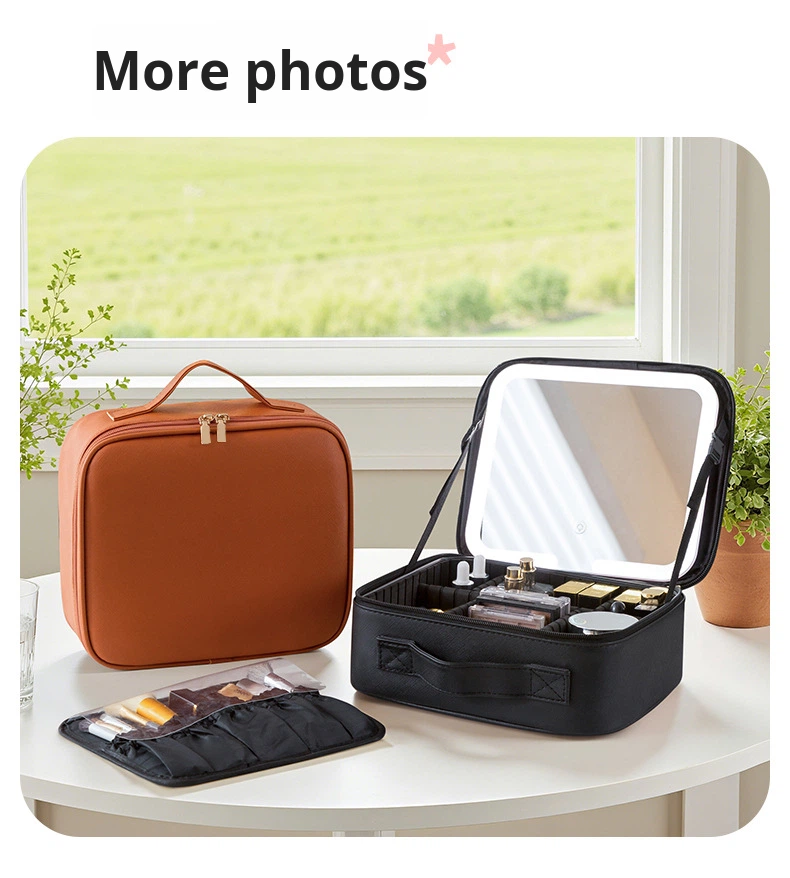
A makeup bag gets opened, zipped, wiped down, and tossed into a larger bag every single day. The details that determine whether it holds up to that kind of daily abuse are usually invisible on a product page.
A makeup bag looks like a simple accessory, but it's also one of the hardest small bags to get right. Powder spills, liquids leak, zippers get pulled back and forth—everyday use exposes every shortcut in materials and construction, and users often notice within the first week. The choices you make at purchase determine whether it lasts for ages or gets shoved into a drawer within days.
Here's what separates a durable makeup bag from one that lives at the bottom of a drawer.
Lining and Cleanability: The First Thing to Confirm
The exterior fabric grabs attention, but the lining is what determines whether a makeup bag survives a foundation spill. Wipeable PEVA or EVA linings dominate for good reason: they don't absorb liquids, hold odors, or leave permanent stains after one accident. Fabric linings feel softer and photograph better, but in real use they often don't hold up.
If you know the standards for a waterproof laptop bag, apply the same thinking to a makeup bag—coated lining, sealed seams, and zippers that don't jam once powder gets in.
Quilted makeup bags add a layer of cushioning that protects brushes and powder compacts, but the padding has to sit behind a cleanable lining. Quilted outside, uncoated inside looks premium and performs poorly.
| Lining Type | Best For | Watch Out For |
|---|---|---|
| PEVA / EVA | Entry to mid-range; wipes clean instantly | Can stiffen in cold temperatures; check flexibility |
| Coated nylon | Lightweight, packable designs | Coating wears at fold points |
| Polyester with PU backing | Soft hand feel, moderate protection | Liquids can stain if left too long; clean promptly |
| Quilted + sealed lining | Premium; protects brushes and compacts | Higher cost; bulkier to store |
Size, Shape, and Matching the Use Case
Makeup bags range from palm-sized flat pouches to lay-flat organizers that open into a tray. The right size depends on how you plan to use it.
Small flat pouches fit inside a tote or backpack; larger organizers are meant for a vanity or hotel bathroom counter. For travel, a makeup bag that slips into a suitcase side pocket or lies flat in a larger suitcase turns from an everyday item into a travel accessory.
Unlike hard-shell luggage, which relies on a rigid shell for protection, a makeup bag's protection comes from cushioning and structural support. A semi-rigid base or molded EVA panel lets the bag stand upright on a counter and helps prevent powder compacts from cracking under pressure.
Quilted Makeup Bags: When Cushioning Is Worth Paying For
Quilted makeup bags went from niche to mainstream because the cushioning is visible and tangible—you can see and feel the protection, and the value is immediately obvious. But what determines whether a quilted bag is durable or just photogenic comes down to construction details.
Look for stitching that passes through the padding without crushing it, and a lining sealed behind the quilted layer. Foam thickness matters: too thin offers no protection, too thick makes the bag bulky and hard to store. For most designs, 3–5 mm closed-cell foam is a reasonable middle ground.
This is also a good place to borrow from other categories. The sealed zippers and coated fabrics used in waterproof laptop bags work just as well for a quilted makeup bag that has to survive a toner spill or a damp bathroom counter.
What Makeup Bags Can Borrow from Other Bag Categories
Many good design ideas come from cross-category borrowing. The travel bag and laptop bag worlds have already solved problems that makeup bags are still figuring out.
- Carry-on luggage — size reference. A makeup bag that sits on top of a carry-on or nests inside it becomes a two-piece travel solution.
- Large suitcase — capacity planning. A lay-flat organizer that fits neatly in a large suitcase without wasting space makes packing easier.
- Rolling luggage — luggage pass-through. A small loop on the back of a makeup bag lets it hang on a handle instead of getting lost inside.
- Waterproof laptop bag — sealed zippers, coated fabrics, reinforced stress points. These details apply to makeup bags too.
- Hard-shell luggage — rigid base thinking. A molded EVA base lets the bag stand up and protects glass bottles or powder contents.
- Gender-neutral design — unisex approach. A gender-neutral makeup bag isn't just a color swap; it needs a taller body, wider opening, and fewer metal hardware details.
Internal Structure and Organization
A single-compartment makeup bag is perfectly adequate at the entry level. Move up a tier, though, and users expect at least a brush slot, a zippered pocket for small items, and a divider that separates liquids from powders.
For daily commuting, look for a design with at least one main compartment plus a hidden zippered pocket. Keeping liquids on one side and powder compacts and eyeshadow palettes on the other reduces the risk of a leak contaminating everything else. Removable small boxes or elastic mesh pockets are also practical, keeping lipsticks and mascaras from rolling around.
Styles with a built-in mirror are more convenient in a hotel or when touching up on the go, and models that fold to under 3 cm thick slip more easily into a handbag side pocket.
A Simple Buying Standard
Makeup bags have two clear buying peaks: holiday gifting and spring travel. But setting seasons aside, what really matters in everyday buying is nailing two or three key points—lining material, zipper quality, and padding thickness. Getting these right matters more than chasing every feature on a spec list.
A makeup bag that wipes clean instantly and survives a drop is far more useful than a feature-packed design that fails at both.