How to Design an Anti-Theft Backpack: 8 Practical Security Features
From concealed pockets and lockable zippers to reinforced panels and smarter storage, discover how thoughtful backpack design can make everyday commuting and travel more secure.
Crowded train stations, busy city streets, public transportation, and popular tourist attractions can make it difficult to keep an eye on every personal belonging. A backpack that opens easily or exposes valuables in an outer pocket may create unnecessary opportunities for someone to access its contents.
This is where anti-theft backpack design comes into play. Instead of relying on a single lock or an intimidating appearance, a thoughtfully designed backpack combines concealed storage, more secure closures, durable construction, and convenient organization to make unauthorized access less straightforward.
Understanding these features can help travelers, commuters, students, and everyday users choose a bag that better suits their routines. No backpack can eliminate every security risk, but practical design can help reduce some common vulnerabilities without making daily use unnecessarily complicated.
1. What Makes a Backpack Anti-Theft?
An anti-theft backpack is designed to make unauthorized access more difficult through features such as concealed openings, lockable zipper pulls, protected compartments, and reinforced construction. The emphasis is on reducing easy access to belongings rather than making the backpack impossible to open or damage.
Traditional backpacks often prioritize quick access through exposed front pockets and prominent zipper openings. In contrast, an anti-theft backpack may position important compartments closer to the wearer's body or incorporate closures that are less accessible while the bag is being worn.
The most useful design depends on the environment. A daily commuter may benefit from secure pockets for a phone and wallet, while an international traveler may place greater importance on passport storage, laptop protection, and closures that can accommodate a compatible small lock.
Core principle: Make valuables less exposed, make access more deliberate, and keep the backpack comfortable enough that the security features are actually used.
2. Lockable Zippers and Concealed Closures
Zippers are one of the most important details in anti-theft backpack design. Exposed openings can be easy to reach in crowded environments, particularly when the wearer is distracted or cannot see the backpack's exterior.
Lockable zipper pulls can help secure selected compartments. Depending on the design, two zipper sliders may connect to a small compatible lock, or a zipper pull may attach to a dedicated locking point. These features add a step between an opportunistic attempt and access to the compartment.
What to Look For
Check whether the zipper sliders align easily with the locking point and whether the closure can be operated without awkward movements. Durable zipper tracks, secure stitching around the opening, and well-finished pull tabs also contribute to practical everyday use.
A lockable zipper is not the same as a tamper-proof closure. A small lock may deter casual access, but it does not necessarily prevent cutting, forced entry, or access through other parts of the backpack.
Design tip: Security should not make routine access frustrating. Test how easily a user can open the main compartment, retrieve a transit card, and close the bag again.
3. Hidden Pockets and Smart Storage Placement
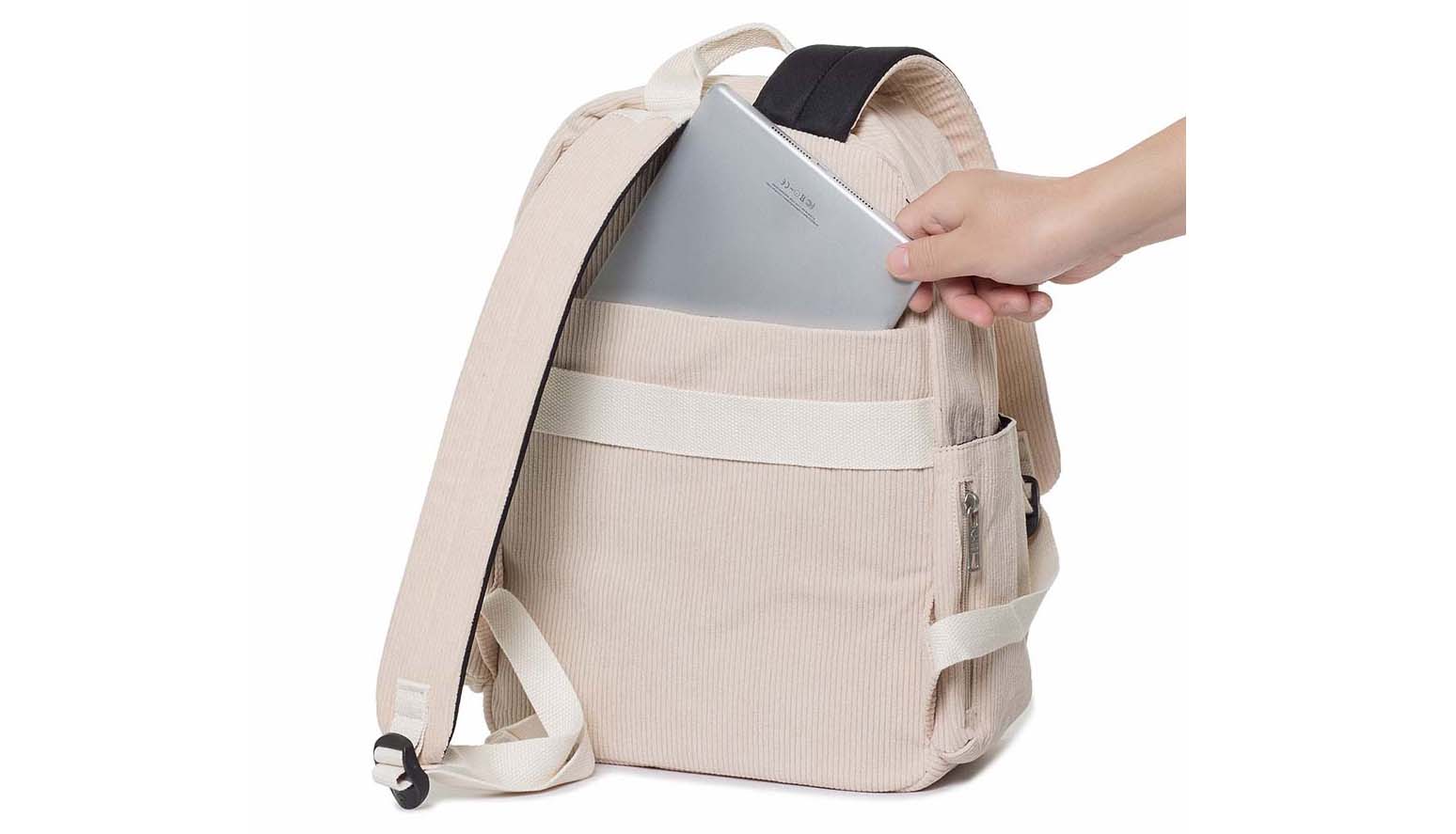
Hidden pockets are a practical way to keep selected belongings out of immediate view. A concealed pocket against the back panel, an internal zippered compartment, or a discreet pocket beneath a flap can provide a place for items such as a passport, cash, spare card, or small valuables.
The value of hidden backpack pockets comes from their placement and usability. A compartment that is difficult for other people to notice but easy for the wearer to reach when needed can offer a sensible balance between concealment and convenience.
Separate Valuables From Everyday Items
Keeping a wallet and passport in a protected compartment can reduce the need to open the main section repeatedly. Frequently used items, such as tissues or a water bottle, can remain in accessible pockets that do not expose important valuables.
Hidden storage should still be large enough for its intended purpose. A pocket that is too shallow, difficult to close, or positioned against a rigid object may be uncomfortable or impractical. The contents should remain secure when the backpack is lifted, set down, or moved around.
4. Back-Panel Access and Restricted-Access Openings
Some backpacks place their main opening against the wearer's back. When the backpack is worn normally, the opening is less directly accessible to someone standing behind the wearer than an exposed front-facing zipper.
This layout can be useful on public transportation, at busy events, or while walking through crowded tourist areas. It may also create a cleaner exterior because the main closure is less visible.
Balance Security With Accessibility
Back-panel openings can make it less convenient to retrieve items quickly. The wearer may need to remove the backpack or find a different way to reach frequently used belongings.
A well-planned design can combine a protected main compartment with a separate, easy-to-reach pocket for lower-risk items. This allows the primary storage area to remain less exposed while keeping transit cards, tissues, or other daily essentials accessible.
5. Slash-Resistant Materials and Reinforced Construction
Concealed pockets and secure closures help control access, but the backpack's physical construction also matters. Some designs use cut-resistant textile panels, reinforced layers, or protective mesh in selected areas to make cutting through the material more difficult.
A slash-resistant backpack may offer additional resistance to certain cutting attempts, depending on its materials, coverage, and construction. However, the term alone does not establish a specific level of protection. A reinforced base, for example, does not mean every panel or strap has the same resistance.
Look Beyond the Fabric Label
Nylon, polyester, coated fabrics, and reinforced textile structures can all be used in backpacks with different performance goals. The fiber name alone does not determine cut resistance, and ordinary thick fabric should not automatically be considered slash-resistant.
Pay attention to which areas are reinforced, how the panels are joined, and whether the shoulder straps and attachment points receive similar attention. A bag's security is influenced by the complete construction, not just one advertised material.
Additional reinforcement may also affect weight, flexibility, and cost. For a lightweight daily commuter bag, selective protection in vulnerable areas may be more practical than adding unnecessary bulk throughout the entire structure.
6. RFID-Blocking Pockets: What Do They Actually Do?
RFID stands for radio-frequency identification. Some contactless cards and identification documents use radio-frequency technology to communicate with compatible readers, although the specific technology and security features vary by document and payment system.
An RFID-blocking backpack typically includes a pocket or lining designed to reduce radio-frequency communication with compatible RFID systems. The protective effect depends on the materials, construction, frequency range, and how the item is positioned inside the pocket.
When Is RFID Protection Useful?
Travelers who carry compatible contactless cards or RFID-enabled identification documents may prefer a dedicated protective sleeve or pocket. However, RFID blocking does not prevent every type of electronic theft, account fraud, phishing, or unauthorized use of personal information.
It is also important not to confuse RFID with all wireless communication. RFID-blocking material does not automatically block GPS, cellular signals, Bluetooth, or every other radio technology under all conditions.
Practical takeaway: Consider RFID protection as a specialized feature for compatible cards or documents, not as a substitute for secure passwords, account alerts, or ordinary travel precautions.
7. Strap Security and Reinforced Attachment Points
Shoulder straps do more than support carrying comfort. They also connect the main body of the backpack to the person wearing it, making their construction important to overall reliability.
Reinforced stitching, suitable webbing, and secure attachment points can help the straps withstand regular use. Some designs also incorporate reinforced sections or cut-resistant materials in selected straps to make certain forms of tampering more difficult.
Comfort and Security Should Work Together
Straps should remain adjustable and comfortable, even when a backpack contains reinforced materials. Poorly positioned padding, stiff webbing, or awkward adjustment hardware can make a security-focused backpack uncomfortable during a long commute.
For people who travel frequently, a luggage pass-through can also be useful because it allows the backpack to sit on a rolling suitcase handle. This improves convenience but should not be confused with a theft-prevention feature.
8. Interior Organization and Everyday Usability
Effective anti-theft backpack features should work with the way people actually use their bags. A backpack can have secure zippers and concealed pockets, but poor interior organization may still force the wearer to open the main compartment repeatedly in public.
Separate storage for a laptop, charger, wallet, passport, and everyday accessories can make it easier to locate important items. A padded device sleeve can also help protect electronics from ordinary bumps, although it is not a guarantee against impact damage.
Reduce Unnecessary Access
Keep frequently used, lower-risk items in accessible locations and store important valuables in a more protected compartment. This reduces the need to expose the main storage area whenever a small item is needed.
A water bottle pocket should be positioned so that a bottle can be removed without disturbing sensitive electronics or important documents. Similarly, key clips and small internal organizers can reduce searching and help the user keep track of belongings.
The aim is not to maximize the number of pockets. It is to create a layout that makes secure storage intuitive and routine.
Anti-Theft Backpack Features: A Quick Comparison
Different security features address different concerns. This comparison can help you decide which features deserve priority for commuting, travel, school, or everyday use.
| Feature | Primary Purpose | Important Consideration |
|---|---|---|
| Lockable zippers | Add a step before a compartment can be opened | Compatibility, ease of use, and closure construction |
| Hidden pockets | Keep selected valuables out of immediate view | Placement, capacity, and accessibility |
| Back-panel opening | Make the main compartment less directly accessible when worn | Convenience when retrieving belongings |
| Slash-resistant panels | Increase resistance to certain cutting attempts | Coverage and evidence supporting protection claims |
| RFID-blocking pocket | Reduce compatible RFID communication | Supported frequencies and actual test conditions |
| Reinforced straps | Improve resistance to wear and selected forms of tampering | Attachment strength, comfort, and flexibility |
| Interior organizers | Keep valuables separated and easier to locate | Practical layout and everyday access |
| Reflective accents | Improve visibility in some low-light conditions | Visibility is not the same as theft prevention |
How to Choose an Anti-Theft Backpack for Your Lifestyle
The right anti-theft travel backpack depends on where you go, what you carry, and how often you need to access your belongings. A tourist moving through crowded train stations has different priorities from a student commuting to class or a professional carrying a laptop every day.
For Urban Commuters
Consider concealed pockets, secure zipper closures, comfortable shoulder straps, and an organized laptop compartment. A streamlined design that stays close to the body may also be convenient on crowded buses and trains.
For Travelers
Look for a layout that separates passports, payment cards, electronics, and everyday items. Lockable zipper points and a concealed valuables pocket may be useful, while weather protection and a luggage pass-through can improve travel convenience.
For Students
Prioritize comfort, suitable capacity, reliable zippers, and separate storage for school supplies and electronics. Extra security features are helpful only when the backpack remains manageable and easy to use throughout the school day.
Questions to Ask Before Buying
Does the backpack protect the items you carry most often? Are the security features integrated into the actual construction? Can you access everyday essentials without repeatedly opening the main compartment? Do the materials and reinforcements match the level of protection being claimed?
Consider these questions together rather than judging a bag by a single feature. A practical backpack should balance security, comfort, organization, weight, and appearance.
Frequently Asked Questions About Anti-Theft Backpacks
What is an anti-theft backpack?
An anti-theft backpack incorporates design features intended to make unauthorized access more difficult. Examples include concealed pockets, lockable zipper points, back-panel openings, and reinforced materials. These features can reduce certain risks but cannot guarantee that theft will not occur.
What features should an anti-theft backpack have?
Useful features depend on your routine, but common options include secure closures, concealed storage, reinforced construction, and practical interior organization. Travelers carrying compatible contactless cards may also consider RFID-blocking storage. Comfort and ease of access remain important.
Do lockable zippers prevent theft?
Lockable zippers can make casual access to a compartment more difficult, especially when the bag is worn in a crowded place. They do not prevent every form of forced entry, cutting, or access through another opening. They are one part of a broader security approach.
Are hidden backpack pockets useful for travel?
Hidden pockets can keep selected items, such as passports or spare payment cards, out of immediate view. Their usefulness depends on their location, capacity, and accessibility. They should complement sensible storage habits rather than replace awareness of your surroundings.
What does slash-resistant backpack mean?
A slash-resistant backpack uses materials or reinforcement intended to increase resistance to certain cutting attempts. The level of protection depends on the material, the areas covered, and the construction. The term alone does not establish that every panel or strap has been tested to the same standard.
Does an RFID-blocking backpack protect credit cards?
An RFID-blocking pocket may reduce radio-frequency communication with compatible contactless cards when the pocket is designed for the relevant technology. It does not protect against every type of payment fraud, account compromise, or identity theft. Check the specific protection claims and supported conditions.
Is a back-opening backpack more secure?
A back-opening design can make the main compartment less directly accessible to someone standing behind the wearer while the bag is being worn. Its effectiveness depends on the actual design and how the backpack is used. It can also make quick access less convenient.
Can an anti-theft backpack be lightweight?
Yes. A security-focused backpack can use selective reinforcement, discreet pockets, and practical closures without adding heavy protective layers everywhere. However, the actual weight depends on the materials, dimensions, padding, and construction.
How can I keep my backpack secure in crowded places?
Keep important valuables in protected compartments, close all zippers, and wear the backpack in a position that allows you to remain aware of it. Avoid leaving the bag unattended, and use available secure storage when appropriate. Design features work best alongside sensible everyday habits.