How to Choose a Backpack for College Outdoor Travel
From early morning lectures to spontaneous weekend hikes, college life rarely stays in one place. The right backpack should carry your everyday essentials comfortably while leaving enough room for the gear that makes outdoor adventures possible.
The trick is finding a balance between campus convenience and travel-ready performance. Instead of choosing a bag simply because it looks spacious or has plenty of pockets, focus on capacity, fit, materials, and the way you actually spend your time.
1. Choose the Right Backpack Capacity for Your Trips
Capacity is one of the first things to consider when comparing backpacks for college students. A bag that works for carrying a laptop across campus may feel cramped when you add a rain jacket, snacks, a change of clothes, and hiking essentials.
For everyday classes and short outdoor outings, a backpack in the 20–30 liter range is a useful starting point. If you regularly take overnight trips or need extra room for bulky layers and personal items, consider a larger travel backpack. The ideal size depends on your packing habits, the weather, and whether you'll have access to accommodation or other supplies.
| Backpack Capacity | Typical Use | What It Can Carry |
|---|---|---|
| 15–20 L | Campus and short walks | Laptop or tablet, notebook, water, small essentials |
| 20–30 L | Classes and day hikes | School supplies, extra layer, lunch, rain gear |
| 30–40 L | Weekend getaways | Clothes, toiletries, travel essentials, outdoor accessories |
| 40 L or more | Longer or gear-heavy trips | More clothing, camping equipment, and bulkier supplies |
These ranges are guidelines rather than strict rules. Lay out everything you plan to bring before buying, and remember that a larger backpack can tempt you to pack more than you need.
2. Prioritize Comfort Before Extra Features
A backpack can look great on a product page but feel very different after an hour of walking. Padded shoulder straps, an adjustable chest strap, and a supportive back panel can make a noticeable difference when you're carrying books alongside outdoor gear.
If your plans include longer hikes, look for a hip belt that helps transfer some of the load to your hips. A ventilated back panel can also improve airflow on warm days, especially when you're walking between campus buildings and outdoor trails.
Whenever possible, try the backpack with a realistic load. Adjust both shoulder straps so the bag sits securely without pulling backward or bouncing excessively. For larger hiking packs, torso length and hip-belt fit matter more than height alone.
3. Look for Durable, Weather-Resistant Materials
Outdoor travel can expose a backpack to rough surfaces, dusty paths, crowded buses, and unexpected showers. Nylon and polyester are common choices because they offer a practical balance of weight, durability, and ease of care. Fabric density, construction, and reinforcement also influence how well a bag handles regular use.
A water-resistant finish can help protect your belongings from light rain and splashes, but it doesn't automatically make a bag waterproof. Check the fabric treatment, zipper construction, and whether a rain cover is included if you'll be hiking in unpredictable weather.
Students who carry electronics should pay particular attention to water-resistant laptop bags and padded device compartments. A raised laptop sleeve can help keep a computer away from the bottom of the bag when it's set down. For heavier rain, use a protective laptop sleeve and keep important electronics inside a separate waterproof pouch.
4. Make Laptop Storage Work for Campus and Travel
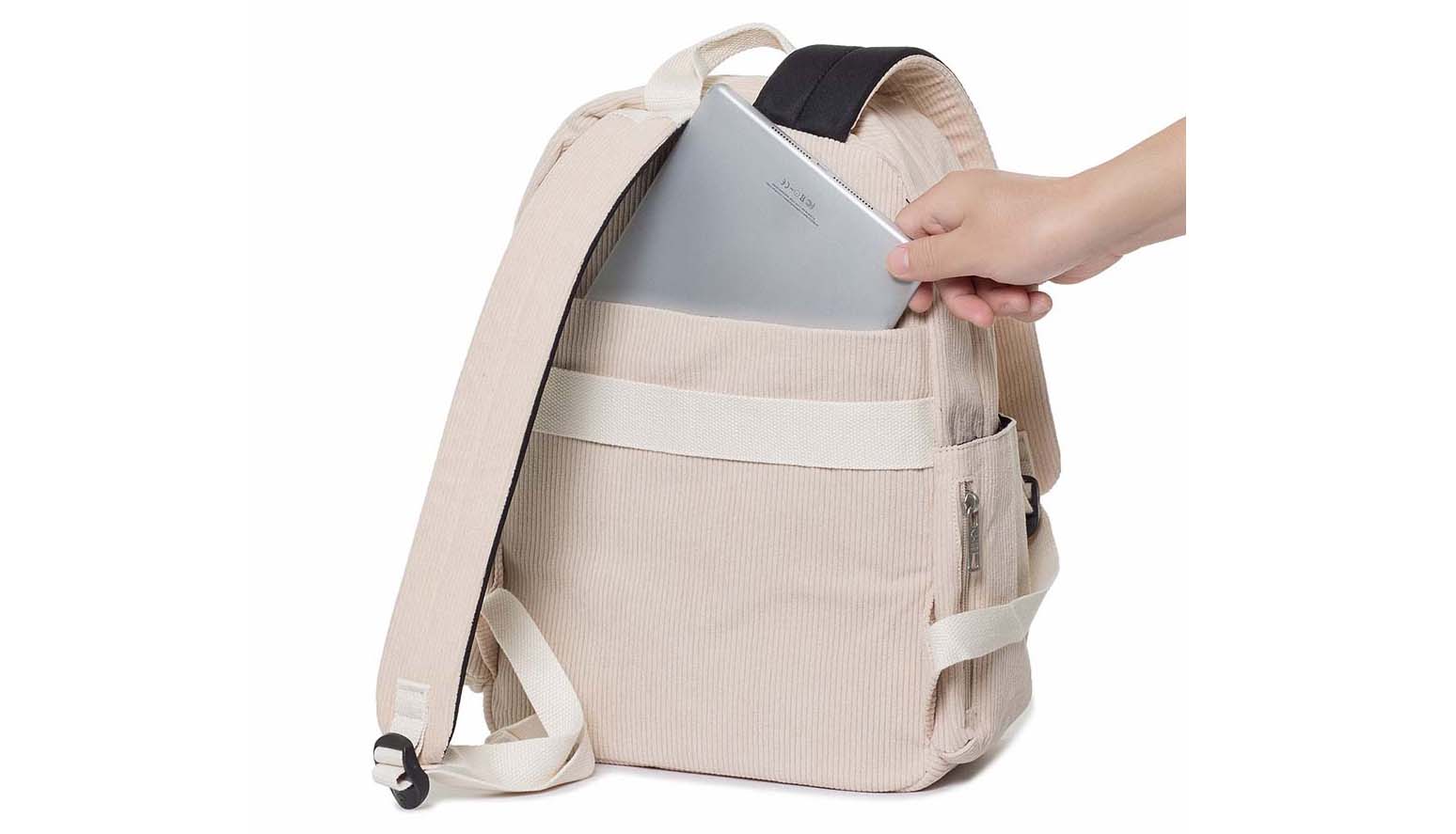
Your backpack may need to switch from classroom mode to travel mode several times a week. A dedicated laptop compartment makes it easier to separate electronics from clothes, snacks, and hiking equipment, while smaller pockets keep chargers, earbuds, keys, and transit cards within reach.
Check the actual dimensions of your laptop rather than relying on a vague claim that a bag fits most devices. Allow space for a protective case, and look for padding around the sides and bottom. A secure sleeve should hold the device without making it difficult to remove.
If you travel frequently by train, bus, or plane, think about access as well. A separate laptop opening can save time at security checkpoints, while a wide main compartment makes it easier to pack clothing and other travel necessities.
Some students prefer rolling bags for laptop equipment when carrying heavy devices or documents over smooth floors. However, wheels and handles add bulk and are less convenient on hiking trails, stairs, or uneven paths. For a mixed campus-and-outdoor routine, a well-fitted backpack is usually more adaptable.
5. Choose a Layout That Keeps Your Gear Organized
Organization matters when you're moving between lectures, public transportation, cafes, and outdoor destinations. A large central compartment offers flexibility, while a few thoughtfully placed pockets make everyday essentials easier to find.
- Laptop sleeve: Keeps your computer separate from other belongings.
- Side pockets: Provide convenient access to a water bottle or umbrella.
- Front organizer: Stores chargers, pens, headphones, and small accessories.
- Internal zip pocket: Helps secure your wallet, travel documents, and valuables.
- External attachment points: Can hold a compact towel or lightweight accessory when appropriate.
Don't confuse more pockets with better organization. Too many compartments can make bulky items harder to pack, especially when you're bringing an extra layer or shoes for a weekend away. Choose a layout that matches the items you reach for most often.
6. Think About Travel Style and Packing Flexibility
Your backpack should suit the way you travel, not just the activities you hope to try. For a day hike, quick-access pockets and space for water and snacks may matter more than a suitcase-style opening. For a weekend trip, a clamshell design that opens wide can make clothing and toiletries easier to pack.
If you often fly, check the airline's current carry-on luggage size and weight rules before using a backpack as your main cabin bag. A soft-sided travel backpack may fit different spaces more easily than hardside luggage, but dimensions and packed shape still matter. A large suitcase may be more suitable for longer holidays, while a compact backpack keeps your hands free on public transportation and walking routes.
Small details can also make travel smoother. A removable pouch helps organize toiletries, and compact quilted makeup bags can keep cosmetics together without letting them spill into the main compartment. A simple, neutral design can transition easily from campus to casual travel, whether you prefer a sporty look or a minimalist tote bag for men-inspired style.
7. Check Construction and Long-Term Practicality
Before making a decision, inspect the details that experience daily wear. Zippers should move smoothly, seams should look even, and stress points around shoulder straps and grab handles should be reinforced. If the backpack has compression straps, buckles, or adjustable webbing, make sure they're easy to use.
Also consider the bag's empty weight. A feature-heavy backpack may provide useful support, but unnecessary weight takes away from what you can comfortably carry. Simple designs with purposeful storage often work well for students who want one bag for several activities.
Finally, check the care instructions. A bag that can be spot cleaned easily and dries without much effort is convenient after a muddy walk or a rainy commute. Avoid assuming that every fabric can be machine-washed, as this can damage coatings or structural components.
Build a Backpack Setup That Fits Your Routine
A college outdoor travel backpack should make daily life easier while giving you enough flexibility to explore beyond campus. Start with the capacity you genuinely need, then prioritize comfort, weather protection, laptop safety, and an organization system that makes sense for your belongings.
You don't need every technical feature to enjoy a weekend outdoors. A comfortable, appropriately sized backpack with durable materials and practical storage can support classes, day hikes, and short trips without making everyday travel feel unnecessarily complicated.
Your Backpack Buying Checklist
- Capacity matches your usual school day and outdoor plans.
- Shoulder straps and back panel feel comfortable under load.
- Laptop compartment fits your actual device dimensions.
- Fabric offers suitable water resistance for your climate.
- Zippers, seams, handles, and straps feel well constructed.
- Pockets are useful without making packing complicated.
- Bag weight and packed size suit your transport and travel plans.