
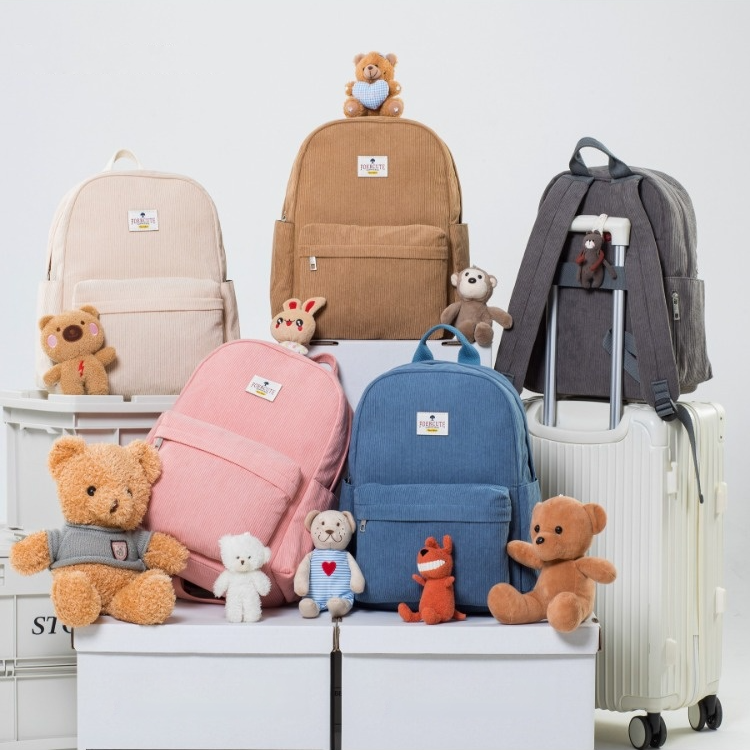
Article Summary: Curious why Japanese-style academic backpacks feel both nostalgic and modern? Explore the structured silhouettes, muted colors, practical compartments, and everyday details that define this distinctive backpack style.
Japanese-Style Academic Backpacks: What Makes the Look So Distinctive?
From structured silhouettes and muted colors to practical compartments, Japanese-inspired academic backpacks bring together a nostalgic school aesthetic and the needs of modern everyday life.
Some backpacks are designed to look technical, while others are built around a softer lifestyle aesthetic. Japanese-style academic backpacks sit somewhere in between, combining the familiar shape of a school bag with cleaner lines, restrained colors, and features suited to modern commuting and travel.
The appeal comes from balance. A structured backpack can feel polished without being formal, while canvas, nylon, muted colors, and subtle hardware can give the design a relaxed sense of nostalgia. The result is a style that can work with casual clothing, campus outfits, and everyday city looks.
What Is a Japanese-Style Academic Backpack?
A Japanese-style academic backpack is generally characterized by a clean, structured silhouette inspired by school and campus bags in Japan. However, the category is broader than the traditional Japanese schoolbag known as a randoseru.
Modern designs may use soft canvas, nylon, polyester, or leather-like materials rather than a rigid shell. They can also include padded laptop compartments, interior organizers, water-resistant fabrics, and other features expected from an everyday backpack.
The visual formula
Think structured silhouette + understated colors + subtle vintage details + modern organization. The design feels academic without looking overly childish or costume-like.
1. A Structured, Boxy Silhouette
One of the easiest ways to recognize this style is its shape. Instead of an aggressively curved outdoor profile, Japanese-inspired academic backpacks often have relatively straight sides, a defined base, and a slightly upright appearance.
This structure creates a neat visual impression even when the backpack is filled with books, a laptop, or everyday essentials. It also gives the bag a more organized appearance than a completely soft, slouchy backpack.
The shape does not need to be rigid. A lightly structured canvas or nylon backpack can achieve a similar look while remaining more flexible for everyday use.
2. Muted Colors Create the Academic Mood
Color plays a major role in the Japanese academic aesthetic. Instead of relying on highly saturated shades, many designs use quiet, versatile tones that feel natural alongside everyday clothing.
| Color Direction | Visual Character | Style Pairing |
|---|---|---|
| Navy | Classic and understated | Denim, white, gray, beige |
| Olive | Relaxed and outdoorsy | Cream, brown, black |
| Charcoal | Minimal and contemporary | Monochrome outfits |
| Brown / Tan | Warm and vintage-inspired | Denim, cream, earth tones |
| Dusty Blue | Soft and youthful | White, gray, light denim |
Color combinations can also add character without making the backpack look busy. For example, a navy body with brown trim or an olive body with cream-colored details can create a subtle vintage-school impression.
3. Materials With a Natural or Matte Feel
Material is another important part of the aesthetic. Canvas can create a traditional academic and vintage appearance, while matte nylon or polyester can give the same silhouette a lighter, more contemporary feel.
Leather or leather-like accents are often used selectively around handles, flap edges, zipper pulls, or logo patches. Small areas of contrasting material can add warmth without overwhelming the simple design.
For everyday use, material selection should also consider practicality. A water-resistant outer fabric can be useful for commuting, while a reinforced base can help the backpack handle frequent placement on floors, benches, and other surfaces.
4. Simple Details Instead of Heavy Decoration
Japanese-inspired academic design usually relies on small details rather than large graphics. A metal buckle, leather patch, contrast stitching, woven label, or simple front pocket can create visual interest while keeping the overall silhouette clean.
This restrained approach is particularly useful for people who want a backpack that works with different outfits. The bag can feel distinctive without becoming the main visual element of an outfit.
5. Practical Storage for Modern Everyday Life
Nostalgic styling does not mean the backpack has to function like an old-fashioned schoolbag. Modern academic backpacks can include dedicated compartments for laptops, tablets, chargers, notebooks, water bottles, and smaller accessories.
A padded laptop sleeve is particularly useful for students and commuters who carry a computer every day. Multiple compartments can also keep cables, headphones, pens, and other small items from disappearing into the bottom of the main compartment.
This is where the style becomes more versatile. The outside may suggest a classic academic backpack, while the inside can be organized around the needs of a modern commuter.
6. Comfortable Shoulder Straps Still Matter
Academic styling should never come at the expense of comfort. If the backpack is going to carry books, a laptop, a water bottle, and everyday accessories, adjustable shoulder straps with adequate padding can make a significant difference.
A structured back panel can also help the backpack maintain its shape while providing additional separation between your body and the contents. For longer commutes, thoughtful weight distribution becomes especially important.
Japanese Academic Style vs. Traditional Randoseru
These two styles are related but should not be treated as identical. A traditional randoseru is a highly recognizable Japanese schoolbag with a firm, box-like structure, flap closure, and strong connection to elementary school life in Japan.
A Japanese-inspired academic backpack is a much broader modern category. It can use soft materials, conventional zippers, contemporary laptop compartments, and adjustable straps while borrowing the clean silhouette and nostalgic character associated with Japanese school bags.
“Randoseru” refers to a specific traditional Japanese schoolbag style, while “Japanese-inspired academic backpack” can describe a wider range of contemporary designs influenced by Japanese school and campus aesthetics.
How to Style a Japanese-Inspired Academic Backpack
The style works naturally with simple everyday clothing. Straight-leg jeans, relaxed trousers, knit sweaters, Oxford shirts, cardigans, canvas sneakers, and lightweight jackets can all complement the academic character without making the outfit feel overly coordinated.
For a more vintage look, combine warm brown or olive tones with denim and cream. For a cleaner contemporary appearance, navy, charcoal, or black can be paired with neutral clothing and minimal accessories.
The same principle works across different wardrobes. The goal is to create a visual connection between the backpack and the rest of the outfit rather than treating the bag as a separate statement piece.
What to Look for Before Choosing One
Japanese-Style Academic Backpack Checklist
- Look for a clean, structured silhouette with a defined base.
- Choose muted colors that work with your existing wardrobe.
- Consider canvas or matte fabrics for a softer academic aesthetic.
- Check whether the laptop compartment fits your actual device.
- Look for practical organization without excessive pockets.
- Check shoulder strap padding and adjustability.
- Consider water-resistant materials for everyday commuting.
- Look for subtle hardware and details rather than oversized decoration.
- Consider whether the backpack works for both campus and city settings.
The Bottom Line
Japanese-style academic backpacks are defined less by a single material or shape than by a combination of visual restraint and practical design. Structured silhouettes, muted colors, subtle vintage details, and thoughtful organization create a look that feels connected to school culture while remaining relevant to modern everyday life.
If you like the academic aesthetic but need a backpack for laptops, commuting, travel, or city life, look beyond the surface styling. A well-designed backpack can preserve the clean Japanese-inspired character while providing the comfort, organization, and protection expected from a contemporary everyday bag.