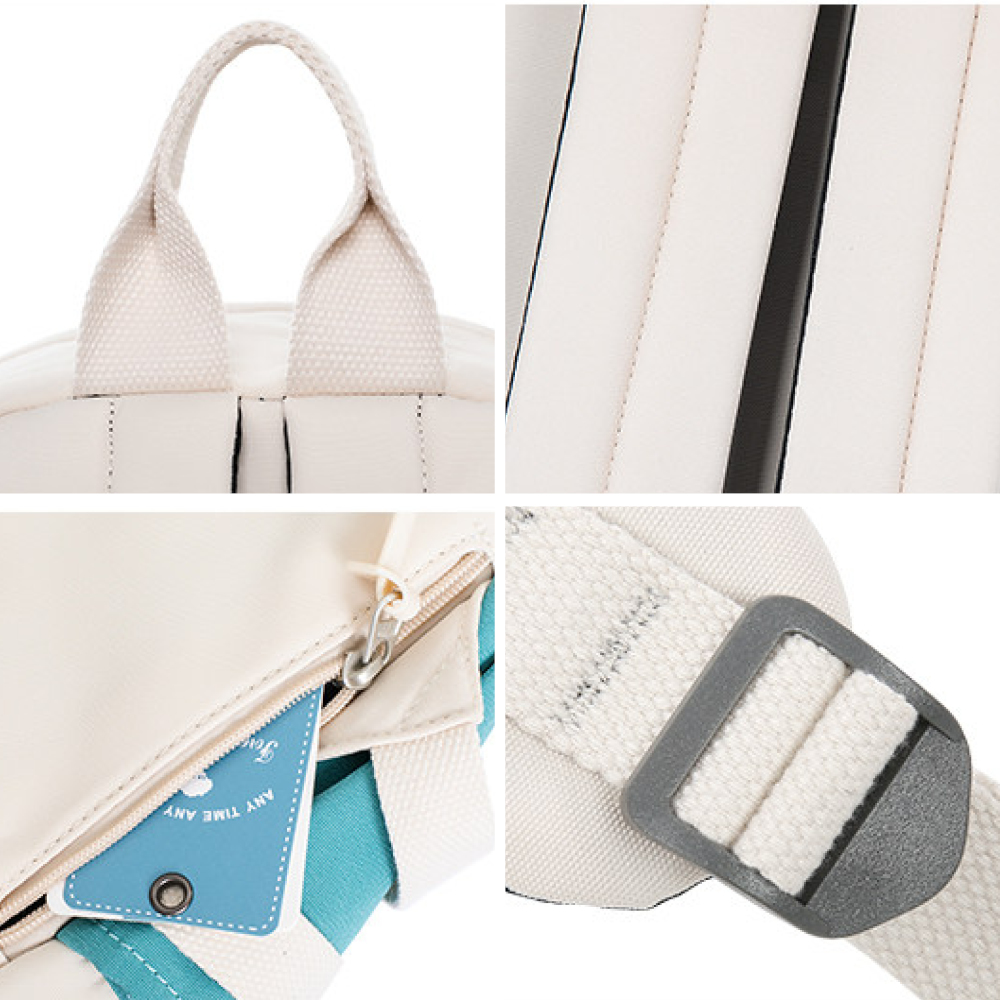
In 2026, backpacks are more than utility items — they are fashion statements and personal expressions. With trends like pastel colors, corduroy materials, and personalized backpack charms dominating search queries, style matters more than ever.
However, the most fundamental element of any good backpack remains the same: getting the dimensions right.A label claiming a bag holds "20L" or "fits a 15-inch laptop" can be misleading. If you ignore exterior dimensions, padding density, and airline rules, the bag may fail in real-world use.
Chapter 1. Understanding the Three Dimensions: Height, Width, and Depth
Every backpack is defined by three primary measurements:
-
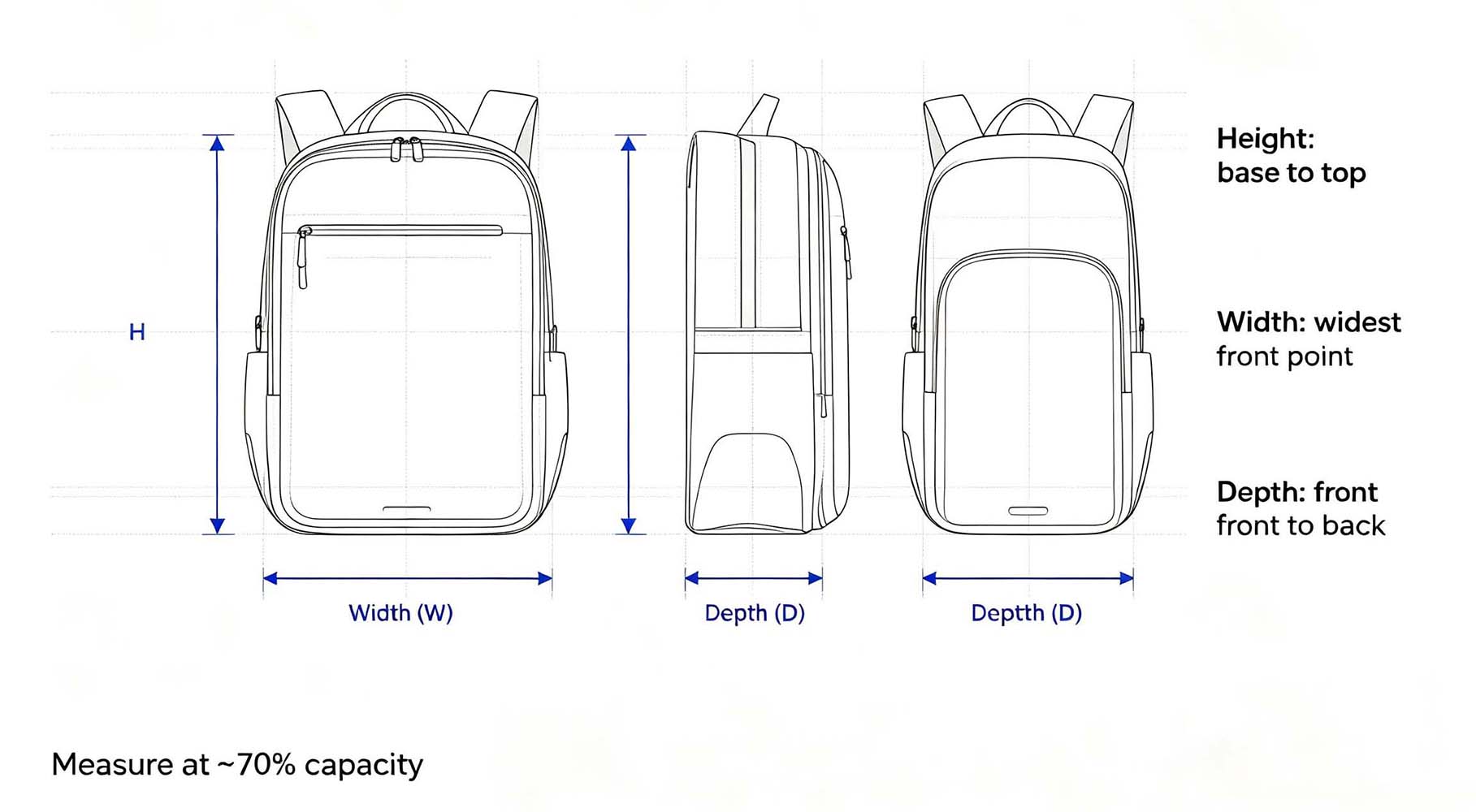
Height (H): Measured from the bottom of the base to the top of the closed bag, taken at the center back panel. This determines carry-on compliance and how it sits on a shelf.
-
Width (W): Measured left-to-right at the widest point across the front face. This affects both capacity and how the bag looks.
-
Depth (D): Measured front-to-back at the deepest point with gussets fully expanded. This defines internal volume and how much you can carry.
Critical tip: Always measure with the bag filled to approximately 70% capacity using soft filler material. An empty bag will give dimensions 1–3 cm smaller than its real-world profile, leading to sizing surprises.
Chapter 2. Standard Dimension Ranges by Backpack Category
Common size ranges vary significantly by category:
| Backpack Type | Height (cm) | Width (cm) | Depth (cm) | Typical Volume |
|---|---|---|---|---|
| Mini / Fashion Backpack | 28–32 | 20–25 | 10–12 | 6–10 L |
| Daypack (School/Commute) | 40–45 | 28–32 | 15–18 | 18–25 L |
| Laptop Backpack | 42–48 | 30–34 | 16–20 | 22–30 L |
| Hiking / Trekking Pack | 50–65 | 32–38 | 20–28 | 35–60 L |
| Travel Backpack (Carry-On) | 50–55 | 33–38 | 20–25 | 35–45 L |
The baseline range for a standard daily backpack is typically 17–20 inches in height, 11–14 inches in width, 5–9 inches in depth, with a capacity of 20–30 liters.
Chapter 3. The Critical Difference Between Dimensions and Capacity
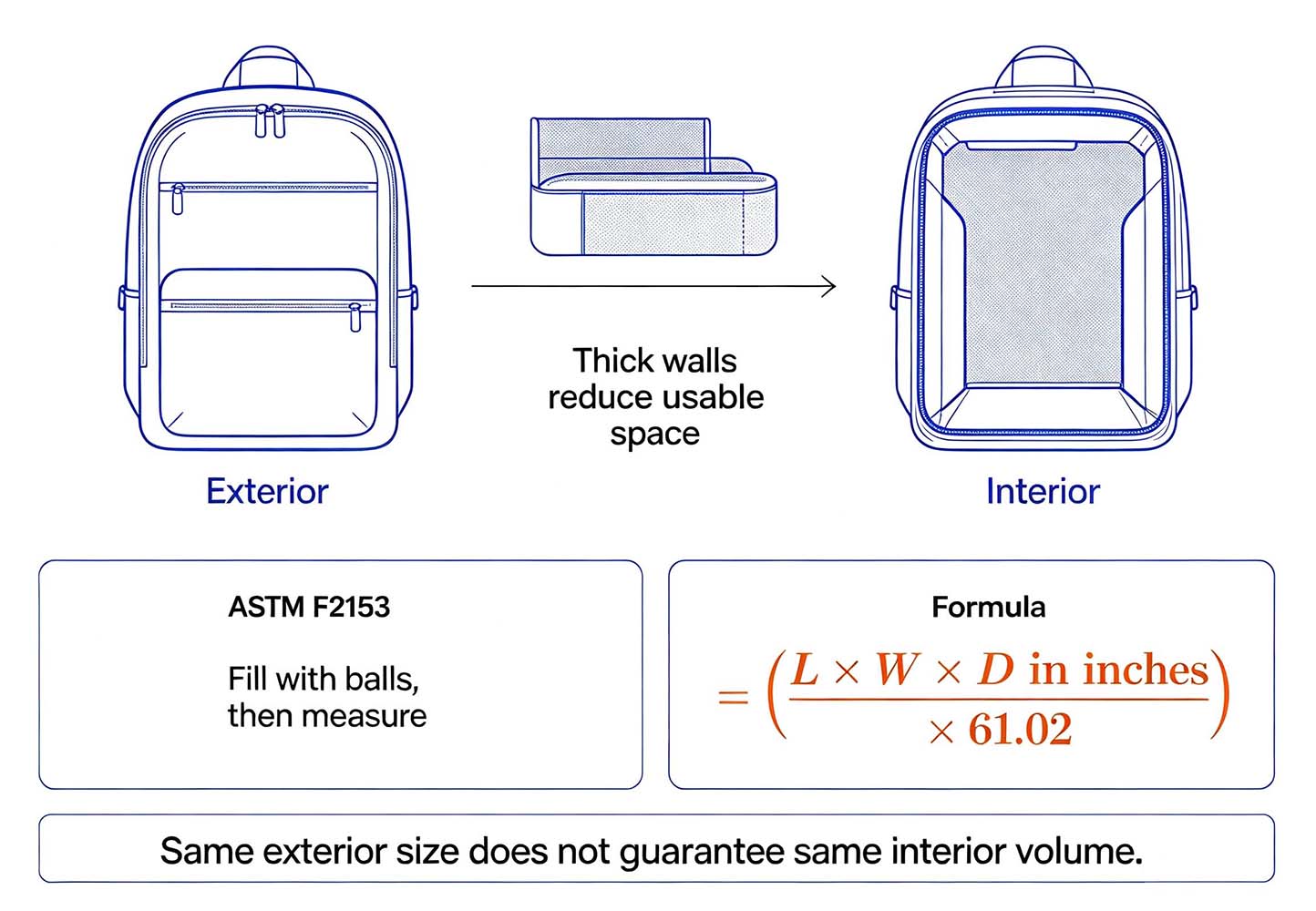
Dimensions represent exterior measurements — think of them as property lines. Capacity represents usable interior space — think of it as square footage. Just as thick walls reduce interior space, a bag using stiff polypropylene fabric offers less internal volume than a flexible nylon bag of the exact same exterior size.
Capacity is measured in liters, and the standard test method (ASTM F2153) involves filling the pack — including all pockets — with gumball-sized plastic balls, then pouring them into a measuring cylinder calibrated in liters.
To convert dimensions to approximate liters: measure the length, width, and depth of the occupied space in inches, multiply them, and divide the total by 61.02.
Chapter 4. Ergonomic Fit: Torso Length Over Height
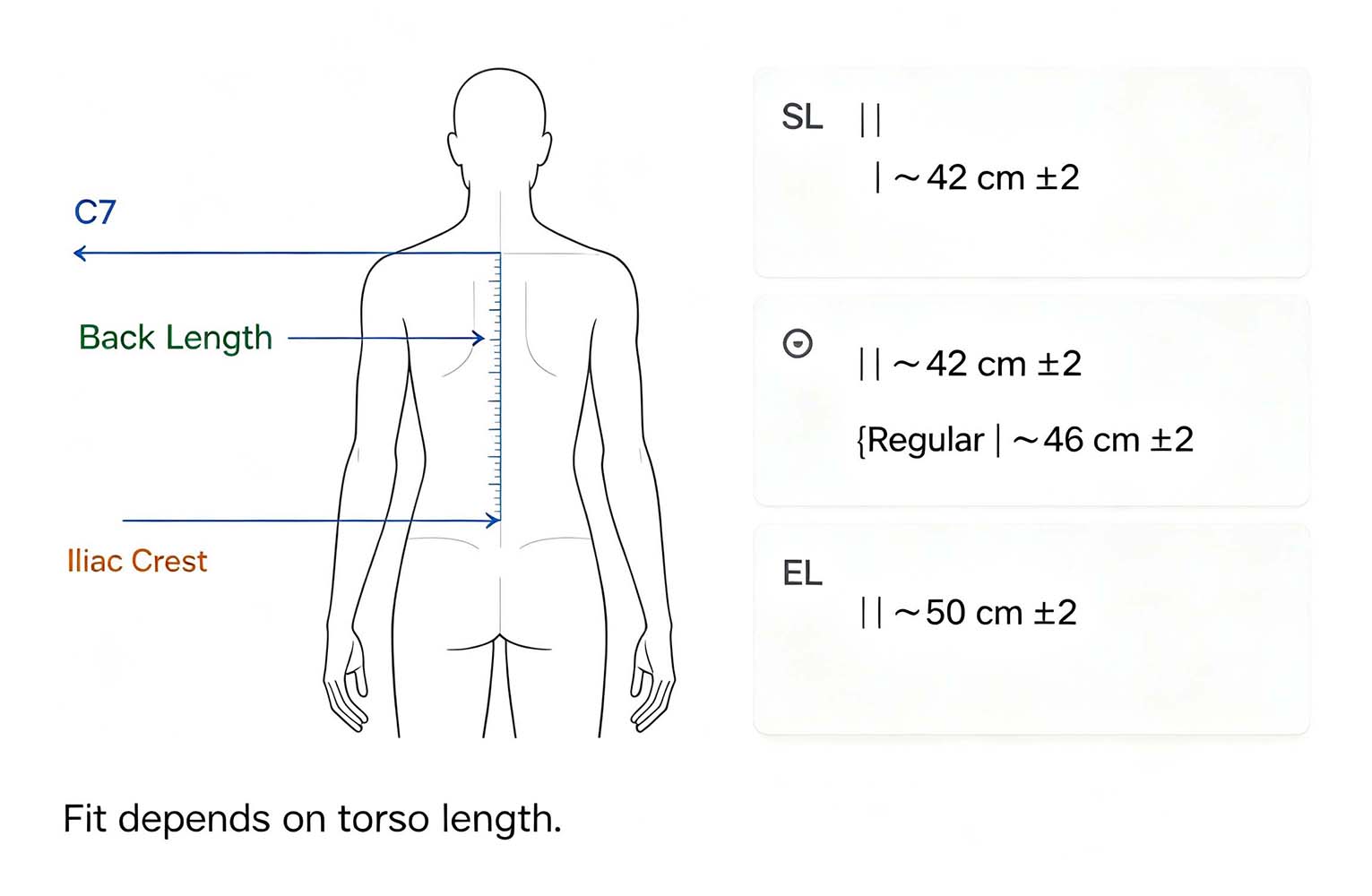
Proper fit relies entirely on torso length, not total body height. For hiking backpacks especially, back length — measured from the seventh cervical vertebra to the upper edge of the iliac crest — is the decisive sizing factor.
Common sizing systems typically offer three fit categories:
-
SL (Slim Line / Women's Fit): For body heights of approximately 160–175 cm, with back lengths of approximately 42 cm (±2 cm). Designed for narrower shoulders, shorter backs, wider hips, and longer legs.
-
Regular Fit: For body heights of approximately 170–185 cm, with back lengths of approximately 46 cm (±2 cm).
-
EL (Extra Long) Fit: For body heights of approximately 185–200 cm, with back lengths of approximately 50 cm (±2 cm).
Chapter 5. Airline Carry-On Compliance: The Hidden Dimension Challenge
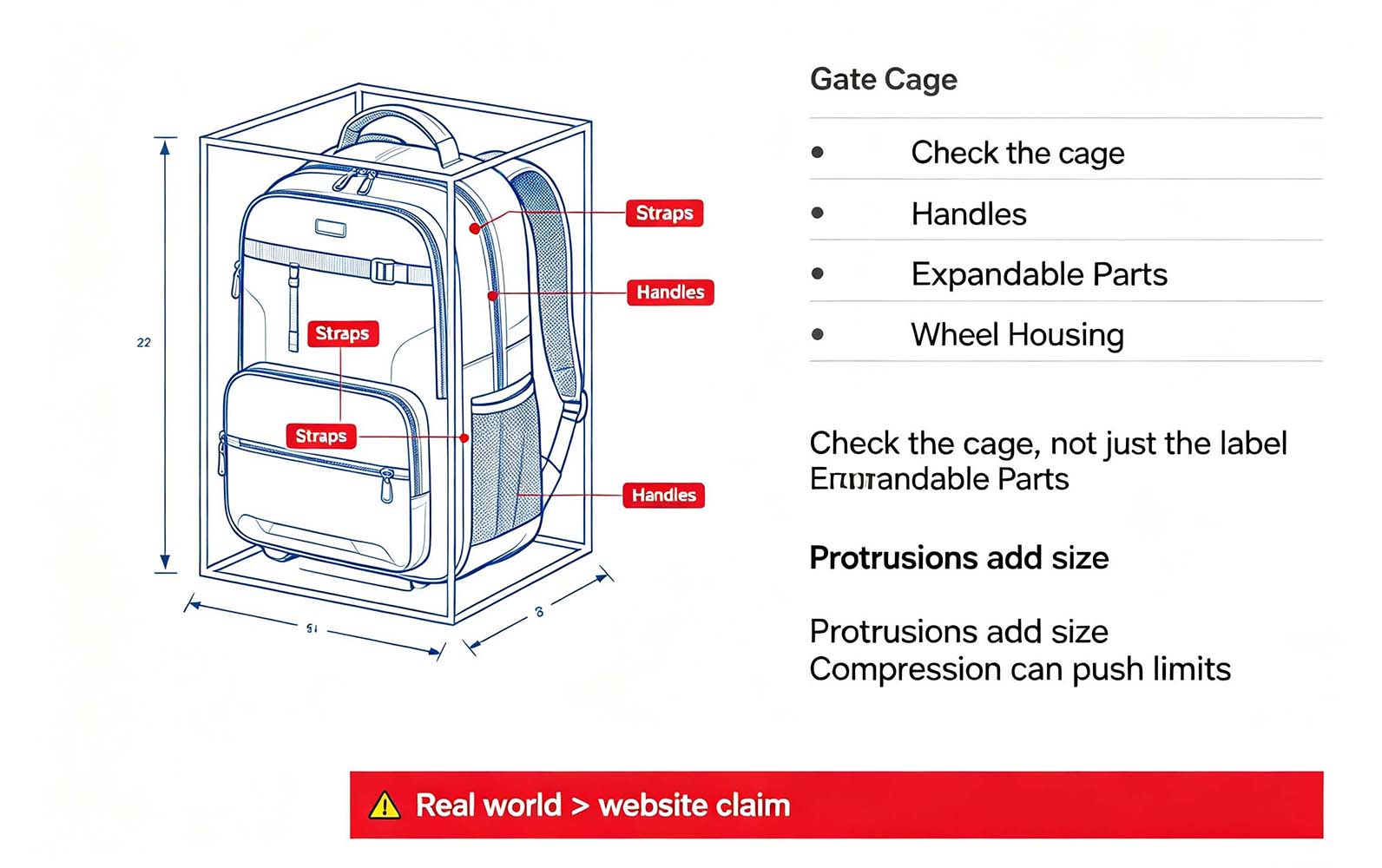
Many people look at a spec sheet, see "22 x 14 x 9 inches," and assume they are safe. They are wrong. Airline websites are marketing; the metal sizing cage at the gate is the reality. Compression straps, expandable compartments, and handle protrusions can push a bag over the limit.
Chapter 6. Adjustable Dimension Design: The Future of Custom Fit
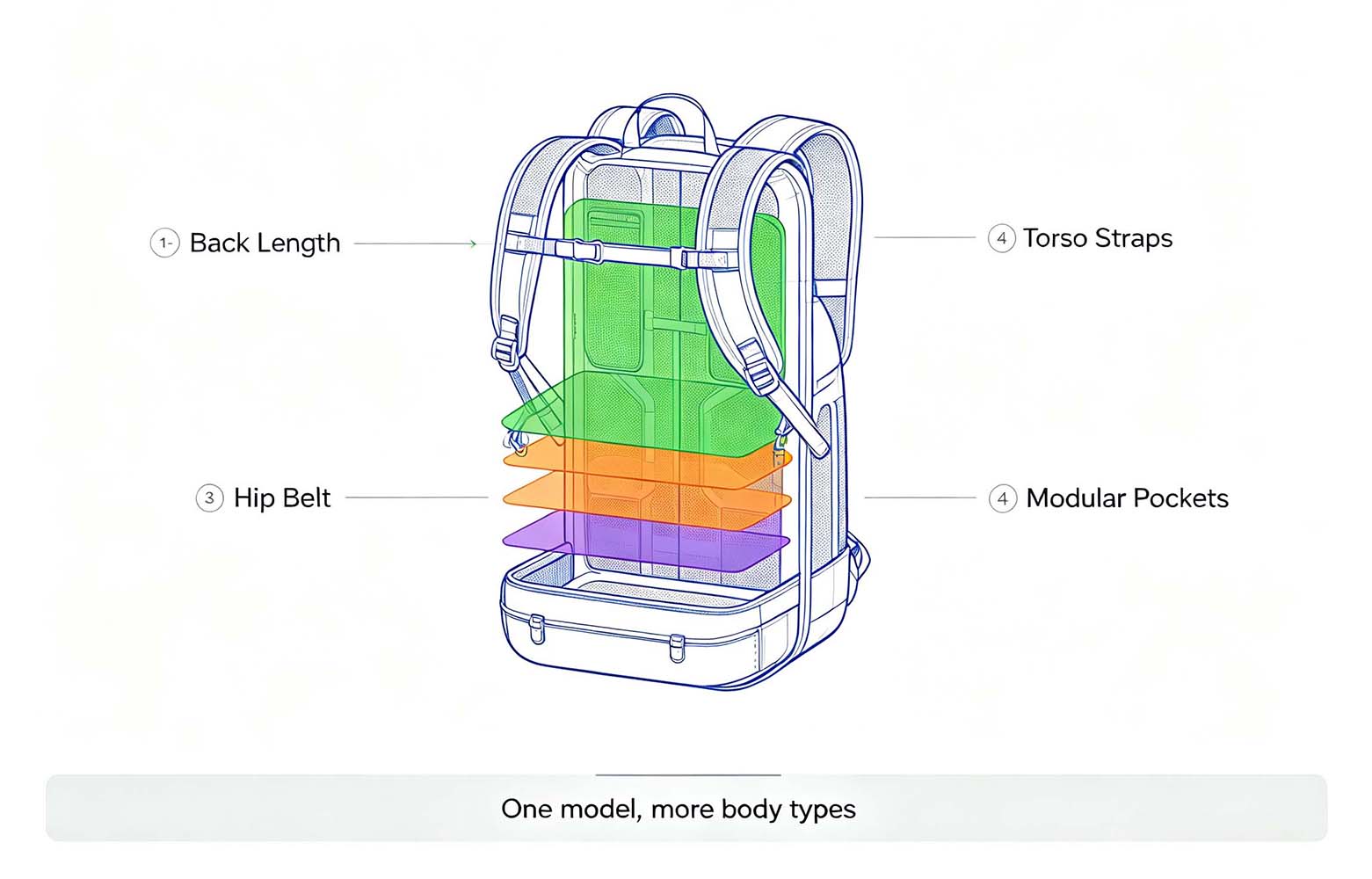
Modern backpack design increasingly incorporates adjustable back length systems, allowing one model to fit a wider range of body types. Adjustable hip belts, torso adjustment straps, and modular compartment systems help you adapt the bag to different uses without compromising comfort.
Conclusion
Mastering backpack dimensions means understanding the interplay between exterior measurements, internal capacity, ergonomic fit, and airline rules. Whether you’re choosing a bag for daily commutes, weekend travel, or long hikes, precision in dimensions is the foundation of a comfortable, useful backpack.